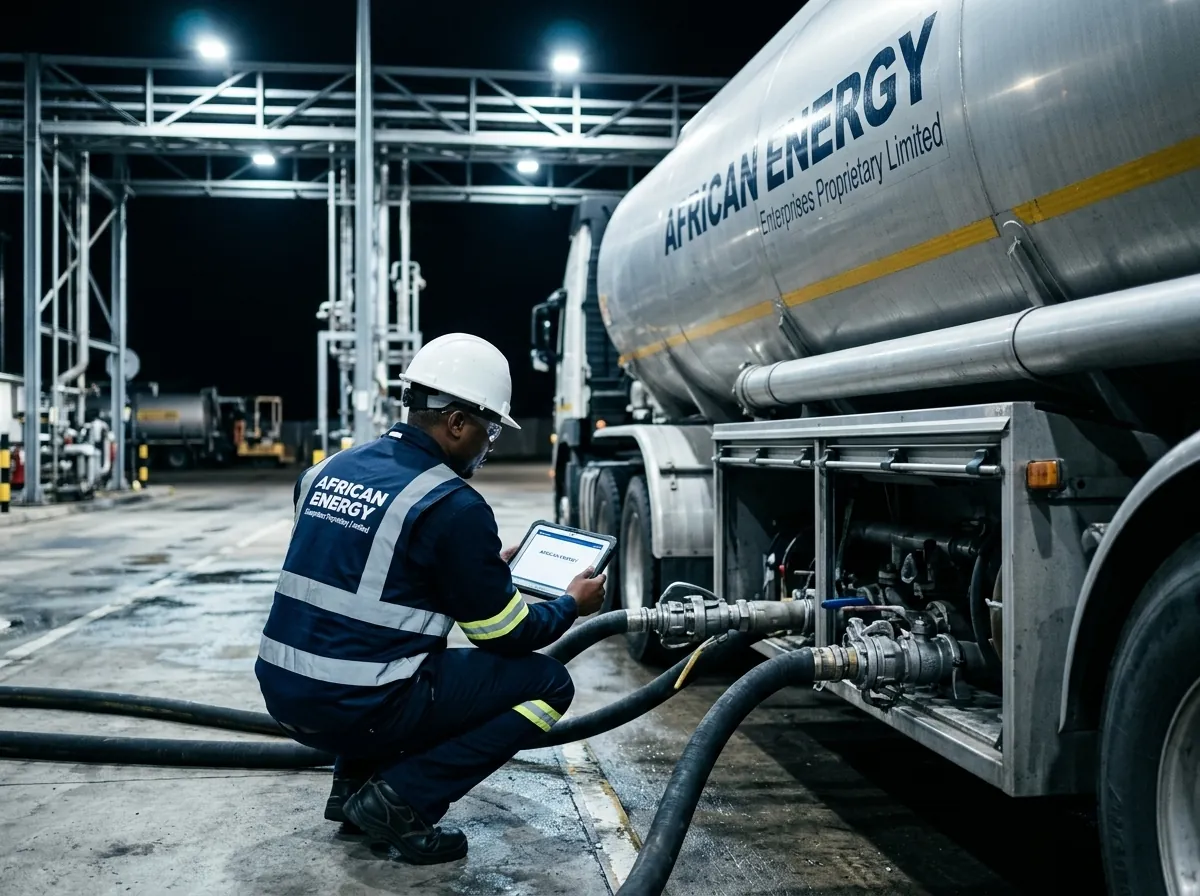
Mines, farms, factories and transport depots often hold diesel on site. Safe, compliant storage protects people and the environment, and protects the fuel itself from contamination.
The key standards
- SANS 10131 covers above-ground storage tanks for petroleum products.
- The SANS 10089 series covers the handling, storage and distribution of petroleum products, including installations.
Municipal by-laws, fire regulations and environmental legislation also apply. Depending on volume, you may need a flammable-liquid certificate or approval from the local fire authority, and larger installations may require environmental authorisation.
Good practice on site
- Bunding: secondary containment sized to hold spills from the tank.
- Separation distances from buildings, boundaries and ignition sources.
- Signage and fire equipment appropriate to the volume stored.
- Water and sediment checks through regular tank dipping and draining.
- Delivery procedures: safe access for tankers, earthing and spill kits.
Fuel quality starts with storage
Most diesel contamination happens after delivery, through water ingress, microbial growth or dirty tanks. See Fuel quality and contamination.
This article is general guidance; consult a qualified engineer and your local authority for site-specific requirements.
Published by African Energy Enterprises. This article is general information and does not constitute legal, tax or financial advice. Regulated prices and rules change; confirm current figures with the relevant authority.